You know that feeling. A beautiful bouquet arrives, you find the perfect vase, you linger in its beauty, take care of it, trim the stems, and change the water every two days like you’re supposed to.
And still, by the end of the week, it’s over. The petals are slowly dropping, the stems are softening, and you have to throw away something that you admired so much just a few days ago.
Preserved roses exist because someone, somewhere, had that exact feeling, but had a dream and enough chemistry knowledge to change that.
Today, we present to you the magic of forever roses. Or eternal roses, or infinity roses, depending on where you find them. These are real blooms that look alive for many, many months. No water. No wilting. No sad Tuesday morning when you have to say goodbye to last week’s bouquet.
Welcome to our guide that covers everything: what preserved roses actually are, how forever roses are made, how long they last, and why they’re definitely worth it.
What Are Preserved Roses? (Simple Explanation)
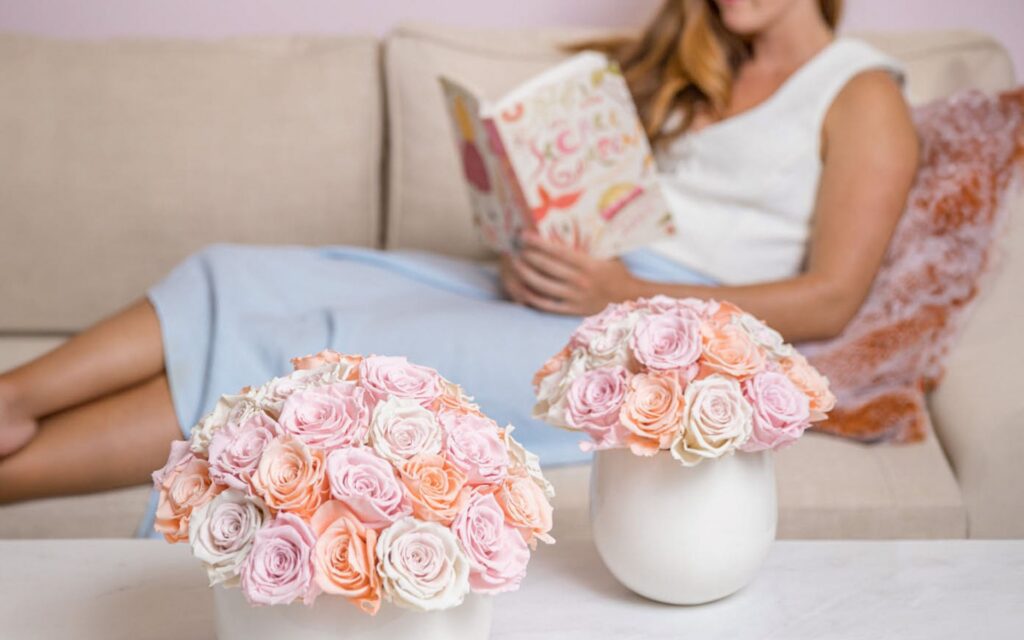
Preserved roses are 100% real roses that have been harvested at peak bloom and put through a careful preservation process that replaces their natural moisture with a plant-based solution. The result is a rose that holds onto everything you love about a fresh bloom: the velvety softness, the rich color, the natural shape, without needing water, sunlight, or any maintenance at all.
Think of it this way. A fresh rose is beautiful, but it’s working against time from the moment it’s cut. A preserved rose has simply had that clock paused.
So what are forever roses, exactly? The same thing. Forever roses is one of the most popular names for preserved roses, and the two terms are used interchangeably. Whether a brand calls them preserved roses, forever roses, eternal roses, or infinity roses, they’re all referring to the same product: real roses that have been treated to last far longer than nature would allow on its own.
What Are Forever Roses? (Are They the Same?)
Yes, forever roses and preserved roses are the same thing. The difference is just in the name, and there are a few of them floating around depending on the brand or region.
Preserved Roses vs Forever Roses
Both terms describe real roses that have gone through a preservation process to extend their lifespan dramatically. “Preserved roses” is the more technical, descriptive term. “Forever roses” is the more poetic, brand-friendly version. You’ll also hear “eternal roses” and “infinity roses” used to mean exactly the same thing.
At Ode à la Rose, we use “forever roses” because it captures what makes them special: not just that they last a long time, but that they carry the feeling of something permanent. A gift that doesn’t fade.
Other Names You Might See
Depending on where you shop, you might come across any of these names for the same product:
- Preserved roses: The most technically accurate term
- Forever roses: The most widely used brand name
- Eternal roses: Common in European and luxury markets
- Infinity roses: Used by various brands to suggest endless beauty
They all refer to real roses treated with a preservation process. The name is just branding. What matters is the quality of the roses themselves and the care that went into preserving them.
How Are Preserved Roses Made?
The preservation process is genuinely fascinating, and it’s what separates a truly beautiful forever rose from one that looks faded and brittle after a few months. Here’s how it works, step by step.
Step 1: Selecting Fresh Roses
It all starts at the farm. Preserved roses begin their life as real, freshly grown roses, and the quality of the final product depends entirely on the quality of the bloom you start with. The best preserved roses come from roses harvested at peak bloom, when the petals are fully open, soft, and vibrant.
At Ode à la Rose, we source our roses from high-altitude farms in Ecuador and Colombia, where rich volcanic soil and ideal growing conditions produce roses with larger heads, deeper color, and stronger stems than you’d find almost anywhere else. That quality carries through the preservation process and shows in the final arrangement.
Step 2: Dehydration Process
Once harvested, the roses go through a controlled dehydration process that carefully removes their natural moisture. This is a delicate stage. Done correctly, it prepares the rose for the preservation solution without damaging the petals or distorting the shape. Done incorrectly, it’s what leads to the brittle, misshapen preserved roses you might have seen that look nothing like a fresh bloom.
Step 3: Glycerin Preservation
This is the heart of the process. Once the natural moisture has been removed, the roses are submerged in a plant-based, glycerin-like solution that gradually replaces the natural sap inside each petal and stem. This solution keeps the petals supple, the color rich, and the overall structure intact, essentially locking the rose in its most beautiful state.
The glycerin solution is non-toxic and completely safe, which means preserved roses are perfectly fine to display in your home around children and pets.
Step 4: Drying and Coloring
After the preservation solution has been absorbed, the roses go through a final drying stage. At this point, some preserved roses also undergo optional color enhancement, a process that deepens or adjusts the natural color of the petals. This is how you get the stunning jewel tones and unusual colors sometimes seen in luxury preserved rose arrangements, deep burgundies, rich purples, soft champagnes.
Natural color preservation is also possible, and many preserved roses retain their original color beautifully without any enhancement.
Final Result
What you’re left with is a rose that looks and feels remarkably close to a fresh one. Soft petals, vibrant color, natural shape. No water needed, no sunlight required, no maintenance whatsoever. Just a beautiful bloom that holds its moment indefinitely.
How Long Do Preserved Roses Last?
This is the question everyone asks first, and the honest answer is: it depends. But the range is genuinely impressive.
Average Lifespan
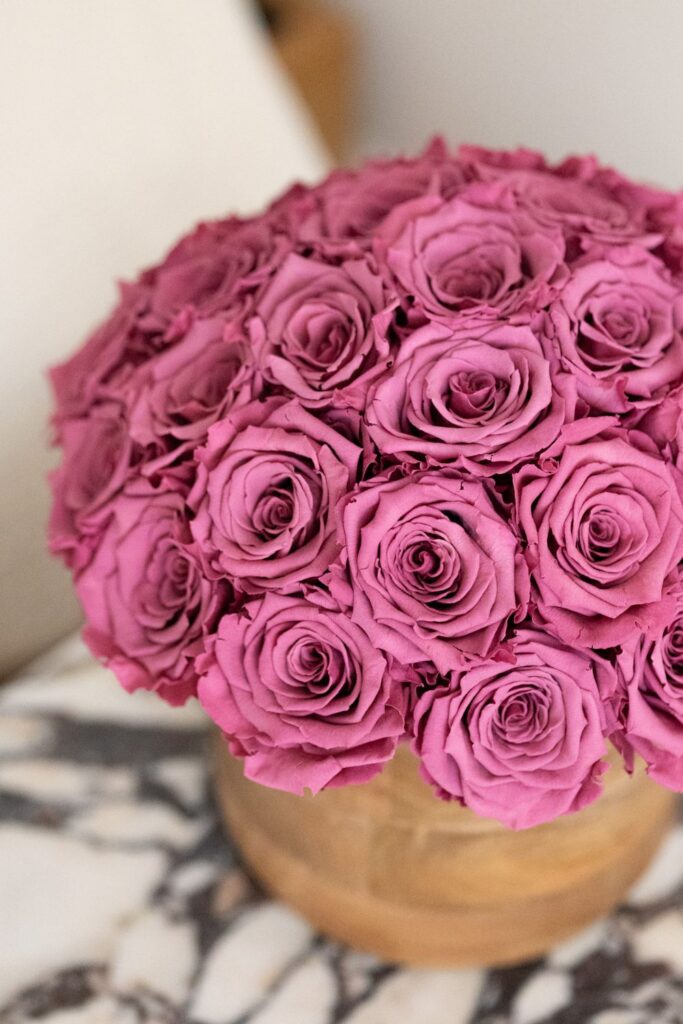
With proper care, most preserved roses last between one and three years. Arrangements kept in a protective glass box, away from direct sunlight and humidity, often last toward the upper end of that range. Some people have reported their preserved rose arrangements still looking beautiful well beyond three years under ideal conditions.
At Ode à la Rose, we typically say one year as a conservative, reliable baseline. Most of our customers are pleasantly surprised by how much longer theirs last.
What Affects Their Lifespan
A few factors make a real difference in how long your preserved roses stay beautiful:
Light exposure: Direct sunlight is the biggest enemy. UV rays fade the color over time, often faster than you’d expect. A bright room is fine. A spot in full sun for hours every day is not.
Humidity: Moisture in the air can gradually affect the preservation solution, causing petals to feel slightly sticky or lose their shape. Bathrooms, kitchens, and rooms with poor ventilation are worth avoiding.
Handling: The more the petals are touched, the faster they show wear. Preserved roses are best enjoyed as a display rather than something handled regularly. A light brush to remove dust every now and then is perfectly fine.
Do They Really Last Forever?
Honestly? No. The name “forever roses” is more poetic than literal. What it really means is that they last far, far longer than fresh flowers, long enough to feel like they might last forever compared to a bouquet that wilts in a week.
The honest expectation is one to three years of genuine beauty, with some arrangements lasting longer under ideal conditions. For a gift or a home decoration piece, that’s a pretty remarkable lifespan.
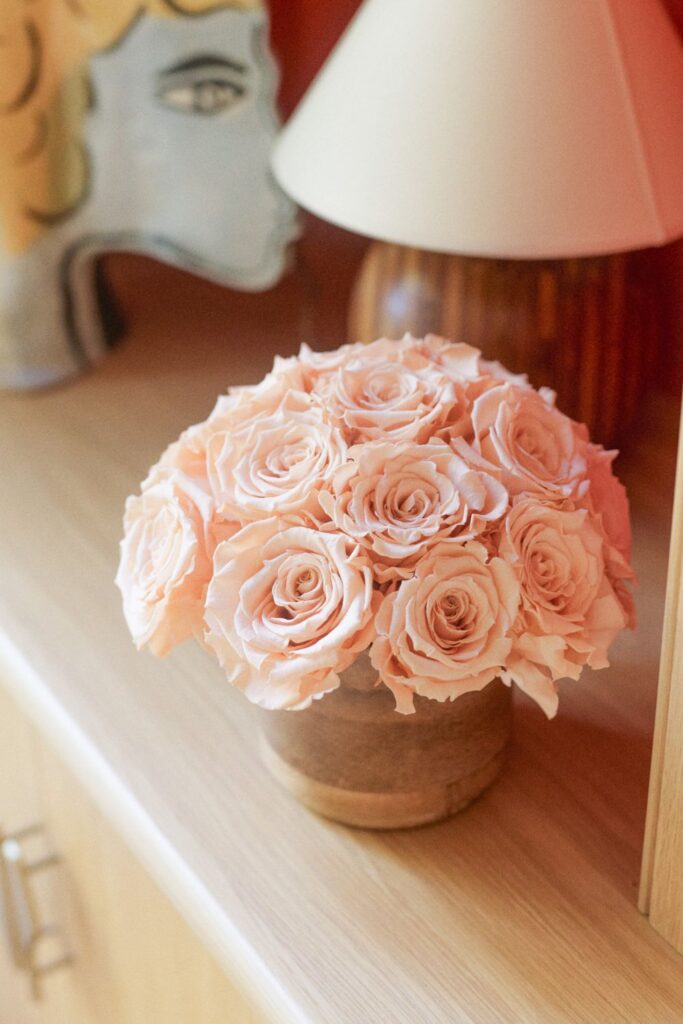
Preserved Roses vs Fresh, Dried, and Artificial Flowers
Understanding how preserved roses compare to other options helps you figure out whether they’re the right choice for your situation.
Preserved vs Fresh Roses
Fresh roses are unbeatable in the first few days. The fragrance, the just-cut appearance, the way they open gradually over a few days, nothing quite replicates that experience. But they fade fast. Most fresh bouquets look their best for five to seven days before the decline begins.
Preserved roses trade that immediacy for longevity. You lose the fragrance (preserved roses have no scent) and the gradual opening, but you gain something that looks beautiful on day one and still looks beautiful on day three hundred. For a gift you want to last, or a home decoration you don’t want to replace every week, that trade-off makes a lot of sense.
Preserved vs Dried Flowers
This is a comparison worth making carefully, because preserved and dried flowers are often confused, and they’re actually very different.
Dried flowers go through a dehydration process that removes all moisture from the petals entirely. The result is flowers that are lightweight, brittle, and tend to fade to muted, dusty tones over time. They have their own charm, but they feel fragile and look noticeably different from a fresh flower.
Preserved roses keep their moisture replaced rather than removed. The glycerin solution keeps the petals soft and supple, the colors rich, and the overall look remarkably close to a fresh rose. If you’ve ever touched a preserved rose and been surprised by how real it feels, that’s exactly why. They’re in a completely different category from dried flowers, and it shows.
Preserved vs Artificial Flowers
Artificial flowers, whether silk, fabric, or plastic, can look convincing from a distance, but they’re not real. They have no natural texture, no organic variation between petals, and a certain uniformity that gives them away up close.
Preserved roses are real flowers. Every petal has the natural softness and variation that comes from something that was actually grown. The difference is immediately apparent when you see or touch them side by side. For anyone who wants the beauty of real flowers without the short lifespan, preserved roses are the obvious choice over artificial alternatives.
Benefits of Preserved (Forever) Roses
Preserved roses, often called forever roses, offer a lasting alternative to fresh flowers without sacrificing their natural beauty. Through a careful preservation process, these roses maintain their softness, shape, and color for months or even years. They require no water or sunlight, making them a practical choice for both everyday decor and meaningful gifts. Beyond convenience, their long lifespan allows them to serve as a lasting reminder of special moments.
Long-Lasting Beauty
The most obvious benefit, but worth saying clearly: preserved roses look beautiful for a year or more. That’s fifty times longer than a fresh bouquet. For a gift or a home accessory, that longevity changes the entire value proposition.
No Maintenance Required
No water, no trimming, no feeding, no sunlight schedules. Preserved roses are genuinely effortless. You display them, and they take care of themselves. For anyone who loves flowers but struggles to keep fresh ones alive (no judgment here), preserved roses are a revelation.
Consistent Appearance
Fresh flowers change every day. They open, they bloom, they peak, and then they start to decline. Preserved roses stay at their peak. The arrangement looks the same on day thirty as it did on day one, which makes them particularly well-suited for home decor where consistency matters.
Suitable for Home Decor and Gifts
Because they don’t need water or sunlight, preserved roses can go anywhere: a bookshelf, a bedside table, a desk, a bathroom (humidity aside), a windowsill. They’re also ideal gifts for people who travel frequently, live in small spaces, or are sensitive to fresh flower pollen, since the preservation process removes allergens along with the natural moisture.
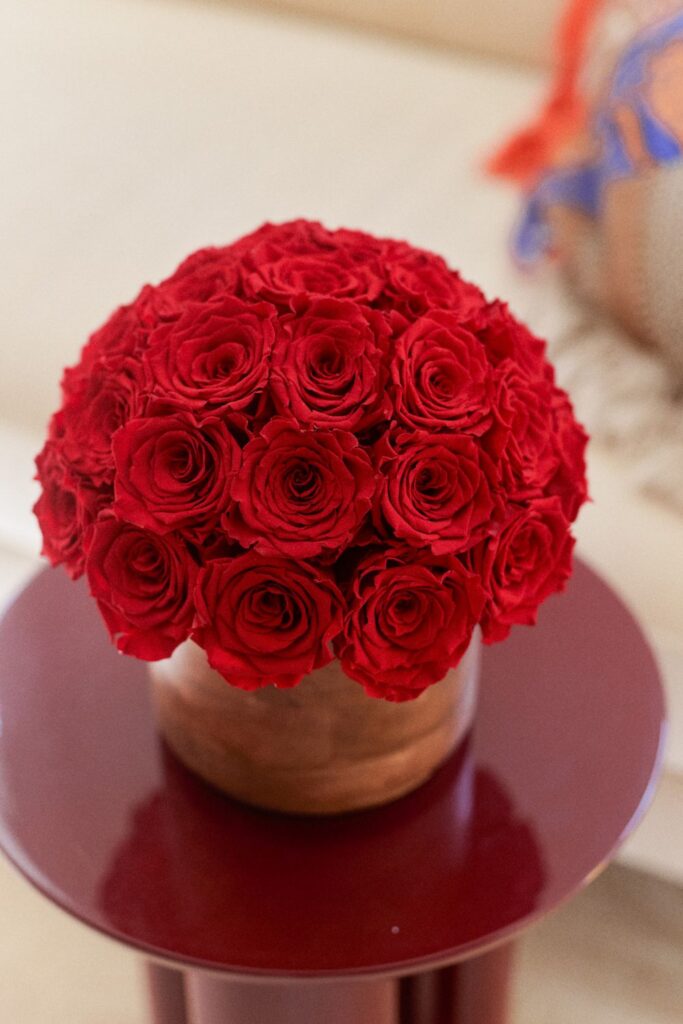
How to Care for Preserved Roses
The care instructions for preserved roses are refreshingly simple. Unlike fresh flowers, they do not require watering, trimming, or special arrangements to stay alive. Still, a few basic practices will help maintain their appearance and extend their lifespan even further.
Keep Away from Sunlight
Find a spot that gets plenty of ambient light but not direct sun. A well-lit room is perfect. A windowsill in full afternoon sun will fade the color noticeably over time.
Avoid Water and Humidity
Never water or mist preserved roses. It seems counterintuitive, but moisture is their enemy. Keep them away from steamy kitchens, bathrooms, and any areas with high humidity. Dry indoor air is ideal.
Light Cleaning Only
Dust settles on preserved roses just like any other decorative object. A soft brush or an air blower used gently every now and then is all they need. Avoid wiping the petals with a cloth, as this can disturb their surface.
If your arrangement came in a glass box, keeping it covered when not on display extends its lifespan noticeably.
When Are Preserved Roses a Good Choice?
Preserved roses are a practical option when you want flowers that last beyond the usual few days. They work well for occasions where longevity matters, such as gifts, home decor, or events that benefit from a consistent look over time. Their low maintenance and lasting appearance make them suitable for both everyday use and more meaningful moments.
Long-Lasting Gifts
Preserved roses are perfect for any occasion where you want the gift to stick around. Anniversaries are the obvious ones, a rose that lasts as long as your love is a genuinely romantic idea. But they work just as well for birthdays, Mother’s Day, graduations, new home celebrations, or any moment where you want to give something that doesn’t disappear after a week.
They’re also a thoughtful choice for people who are difficult to buy for, since a beautiful preserved rose arrangement is something most people wouldn’t buy for themselves but genuinely love to receive.
Home Decoration
A preserved rose arrangement in a glass box or an elegant vase is a legitimate home decor piece. It holds its appearance consistently, requires no upkeep, and adds a touch of natural beauty to any space. Unlike fresh flowers, you don’t need to plan around them or replace them regularly.
Special Occasions (Valentine’s Day, Anniversaries)
For Valentine’s Day and anniversaries especially, the symbolism of a preserved rose carries real weight. A gift that literally lasts carries a message that fresh flowers, however beautiful, simply can’t. It says something more permanent about how you feel. That’s a pretty meaningful thing to hold in a box.
Are Preserved Roses Worth It?
For the right occasion and the right person, absolutely yes.
If you’re buying flowers for a special occasion and you want the gesture to last beyond the week, preserved roses are genuinely worth the premium over fresh flowers. They offer something fresh flowers can’t: staying power. And they offer something artificial flowers can’t: realness.
The honest trade-off is fragrance and the living quality of a fresh bloom. Preserved roses are beautiful and long-lasting, but they don’t smell, and they don’t change or open over time. If the experience of fresh flowers is what you love most, preserved roses won’t replicate that. But if what you want is a beautiful, real rose that stays beautiful for a year or more, they deliver exactly that.
For gifts that matter, for home decoration that lasts, for moments you want to remember, preserved roses are worth every penny.
FAQs About Preserved Roses
Are preserved roses real flowers?
Yes, completely. Preserved roses start life as real, naturally grown roses harvested at peak bloom. They go through a preservation process that replaces their natural moisture with a plant-based solution, but every petal, every stem, every detail is 100% real. They just happen to last much, much longer than a fresh rose.
Do preserved roses need water?
No, and this is one of the things people love most about them. The preservation process replaces the plant’s natural moisture, making preserved roses completely self-sufficient. Never water or mist them. Moisture is actually their enemy.
How long do forever roses last?
With proper care, most forever roses last between one and three years. Arrangements kept in a protective glass box and away from direct sunlight and humidity often last toward the longer end of that range. Results vary based on conditions, but one year is a reliable minimum.
Can preserved roses fade?
Yes, over time, especially if exposed to direct sunlight. UV rays are the main cause of color fading in preserved roses. Keeping them in a bright room without direct sun exposure significantly slows this process. Some gradual aging of the petals is natural over time, but with the right care it’s very slow.
Are preserved roses better than fresh flowers?
It depends on what you’re looking for. Fresh roses offer fragrance, a living quality, and the experience of watching them bloom. Preserved roses offer longevity, zero maintenance, and the beauty of a real rose that lasts for years. Neither is objectively better. They just serve different purposes, and the best choice depends on what matters most to you and the person you’re giving them to.
Conclusion
Preserved roses are one of those things that sound almost too good to be true until you actually hold one. Real petals, real color, real texture, and a lifespan measured in years rather than days. The science behind them is genuinely impressive, and the result is something that bridges the gap between the natural beauty of fresh flowers and the lasting quality of a proper keepsake.
Whether you’re considering them as a gift, a home decoration, or just curious about how they work, the short answer is this: they’re real, they’re beautiful, and they last. Everything else is just details.
If you’re ready to see them for yourself, browse our Forever Roses collection and find something worth keeping.