
Some gifts are meant to fade. Others are designed to stay. And somewhere between those two sits a valuable and important question: Are forever roses worth it, or are they just a beautifully packaged illusion?
At first glance, the idea feels almost too perfect.
Real roses that don’t wilt, don’t need water, and somehow hold their peak beauty for months. It challenges everything we expect from fresh flowers, from roses to peonies to tulips, which are loved precisely because they’re fleeting.
So before you decide where you stand, it’s worth taking a closer look, not just at what forever roses are, but what they actually offer, where they fall short, and whether they truly earn their place next to traditional blooms.
Are Forever Roses Worth It
If you’re looking for a quick, no-overthinking answer, here it is: yes, but only if you value what they’re actually designed to do.
Forever roses aren’t trying to compete with fresh flowers on every level. They win in some areas, and quietly lose in others.
Longevity: strong, they last 1–3 years instead of a week.
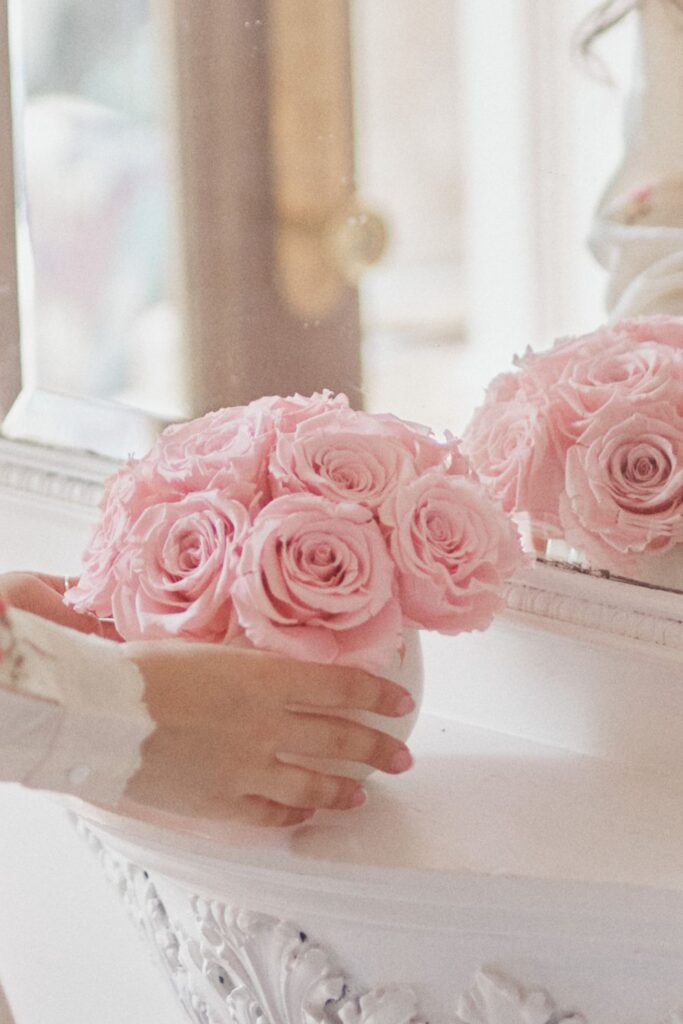
Fresh looks: surprisingly convincing, they keep that just-bloomed appearance.
Maintenance: none, no water, no trimming, no second thought.
Fragrance: limited, this is where fresh roses still lead.
Flexibility: low, what you buy is what you live with.
Emotional impact: different, less fleeting, more persistent.
So are forever roses worth it?
They are if you want something that stays, visually, emotionally, and practically.
They’re less convincing if what you love about flowers is exactly the opposite: the change, the scent, the short-lived beauty.
And that’s really the lens for everything that follows.
What Are Forever Roses and Why Are They Expensive
Let’s clear something up right away, because this is where most people get it wrong.
Forever roses are not dried flowers. And they’re definitely not fake.
They’re real roses, cut at the exact moment they look their best, then preserved through a process that quite literally pauses time. Instead of letting the flower dehydrate and crumble, its natural sap is replaced with a plant-based solution, most commonly glycerin, so it keeps that soft, almost “just picked” feel.
What You’re Actually Paying For
The preservation process itself is a bit of science, a bit of craftsmanship, and a lot of patience.
And that’s exactly where the price starts to make sense.
- Real roses + preservation process: Think of it this way. With fresh roses, peonies, or tulips, you’re buying something that’s already on a countdown. With forever roses, you’re paying to interrupt that countdown entirely.
The preservation process can take weeks, sometimes close to a full month. It’s not just soaking flowers in a solution and calling it a day.
There’s dehydration, infusion, careful monitoring of temperature and humidity, and constant quality checks to make sure the rose doesn’t lose its shape or color halfway through.
And not every rose qualifies. Only near-perfect blooms are selected because, once preserved, every detail remains visible.
- Craftsmanship + packaging: Then comes the part that’s easier to see but often underestimated. Design.
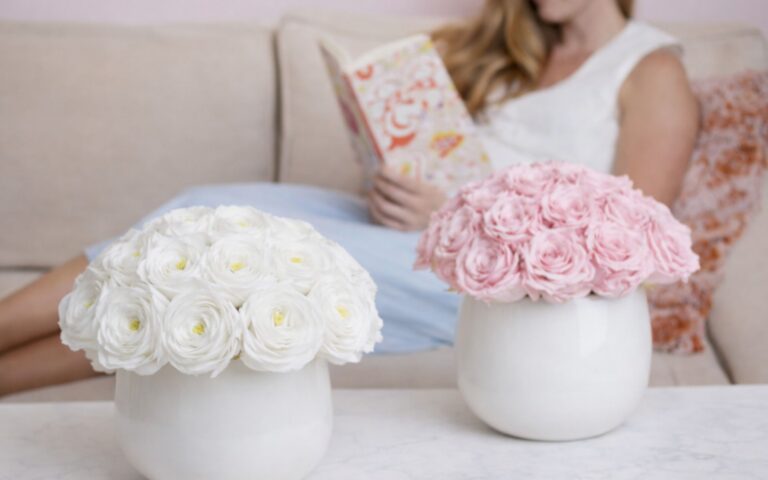
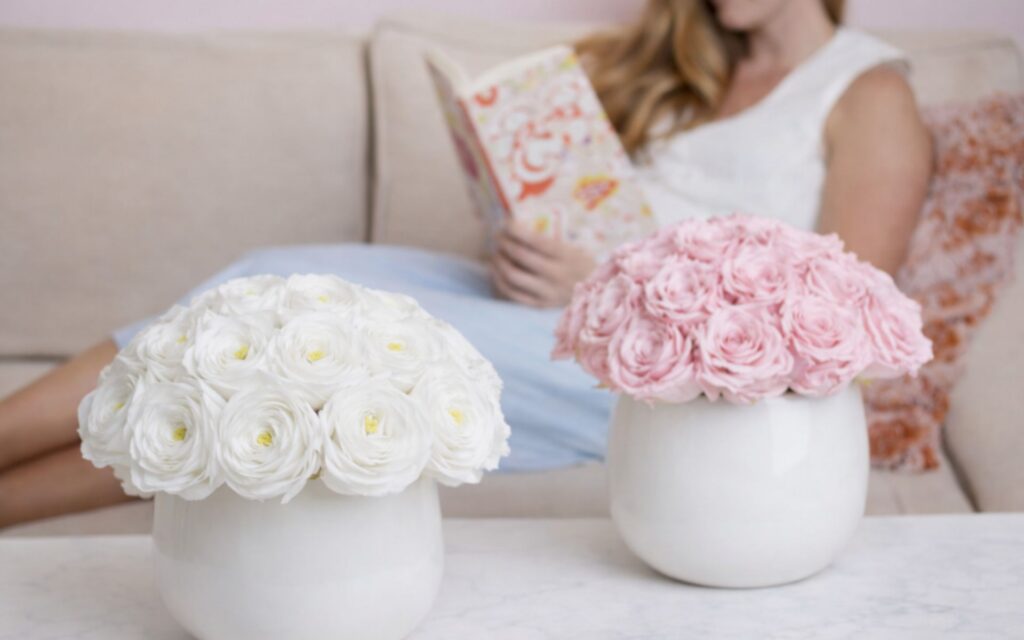
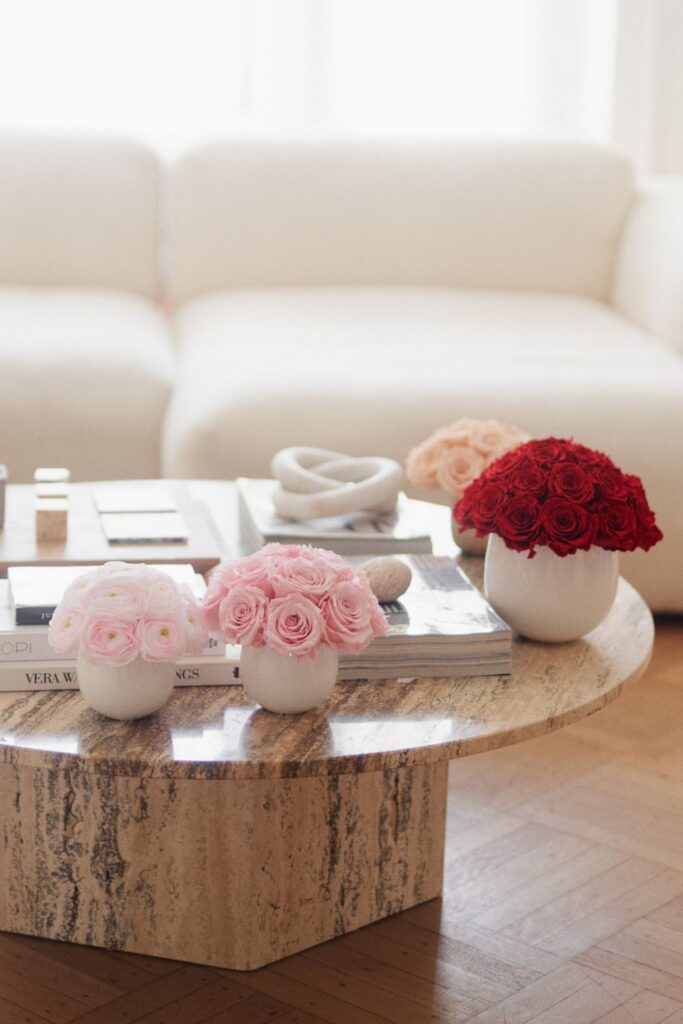
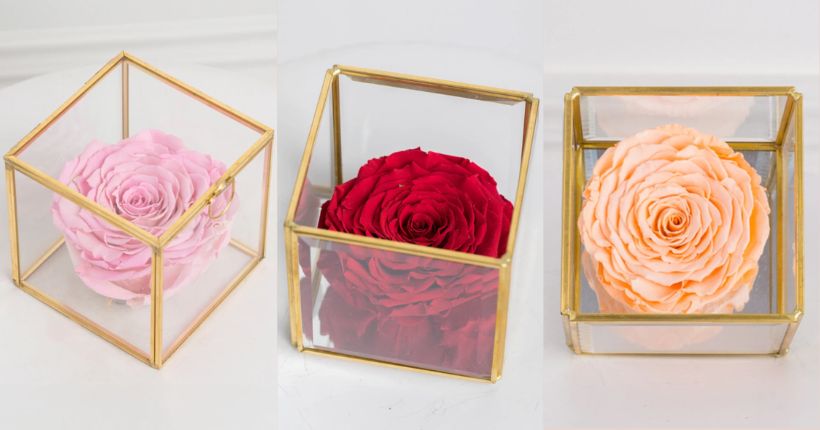
Forever roses are arranged more like objects than bouquets. Clean lines, balanced compositions, structured boxes, or glass domes. They’re meant to sit on a coffee table, a desk, a bedside table, and actually belong there.
So part of what you’re paying for is that finished look. Not just flowers, but something that feels considered.
Typical Price Range
Most forever rose pieces fall somewhere between $30 and $200+.
At the lower end, you’ll find single preserved roses or smaller designs. As you move up, you’re paying for density, size, and presentation, fuller arrangements, more intricate designs, and more premium packaging.
And yes, compared to a fresh bouquet, that price can feel like a jump. But it’s not really the same category.
Why They Cost More Than Fresh Flowers
The price gap starts to make sense the moment you stop thinking in days and start thinking in months, or even years.
Long lifespan
Fresh roses typically last around 5 to 10 days. That’s their nature. Beautiful, but short-lived.
Preserved roses, on the other hand, are designed to last 1 to 3 years under the right conditions.
So instead of replacing flowers multiple times a month, you’re buying something that holds its appearance long-term. When you stretch the cost over time, the math starts to shift in a way most people don’t initially consider.
A slow, technical preservation process
This is where most of the real cost sits, and where forever roses separate themselves entirely from fresh flowers.
The process involves removing the rose’s natural water and sap and replacing them with glycerin, a compound that doesn’t evaporate. That’s what keeps the petals soft instead of drying out.
Depending on the method, this can take 2 to 6 weeks, with controlled temperature and humidity and constant monitoring to avoid damaging the flower mid-process.
And here’s the key detail: it’s not mass production-friendly. It’s slow, delicate, and not every rose survives the process.
Premium positioning (and why it’s intentional)
Forever roses are not priced like everyday bouquets because they’re not meant to function like them.
They’re positioned closer to long-term décor or keepsake gifting.
That includes higher-grade roses (often sourced from top farms), curated designs, and structured packaging meant to last as long as the flower itself.
In other words, you’re not just paying for a flower that lasts. You’re paying for a controlled transformation of something naturally temporary into something that feels almost permanent.
And that shift, from fleeting to lasting, is where the real value (and the real cost) comes from.
Pros of Forever Roses
What makes forever roses appealing isn’t just that they last longer, but that they offer a completely different kind of flower experience, one that’s more stable, predictable, and long-lasting.
Long Lifespan
Unlike fresh roses, which typically last around 5 to 10 days, preserved roses are designed to maintain their appearance for 1 to 3 years when kept in the right conditions. This is made possible by replacing the flower’s natural moisture with a glycerin-based solution that significantly slows the aging process.
No Maintenance Required
One of the most practical advantages is how little effort they require. There’s no need to water, trim stems, or adjust placement based on sunlight.
Once arranged, they remain as they are, which makes them particularly useful in environments where fresh flowers are harder to maintain, such as offices or warmer interiors.
Consistent Appearance
Fresh flowers naturally change over time. They open, soften, and eventually fade, which is part of their charm.
Forever roses, by contrast, remain visually consistent. Their shape, color, and structure stay almost identical over time, making them more reliable for decorative purposes where consistency matters.
Cost Efficiency Over Time
Although the upfront cost is higher, the long-term value becomes clearer when compared to regularly purchasing fresh flowers.
If you’re replacing bouquets every one or two weeks, the total cost over several months can exceed that of a single preserved arrangement, which maintains its appearance without needing replacement.
Ideal for Gifts and Decor
Because they last, forever roses tend to carry a different kind of emotional weight. They’re often chosen for occasions where the intention is to create something lasting rather than temporary. Think milestone birthdays, the birth of a new baby, or a grand anniversary that needs to be marked specially.
Cons of Forever Roses
That said, the same qualities that make forever roses appealing can also be limitations, depending on what you expect from flowers.
Higher Upfront Cost
Forever roses are more expensive than fresh bouquets, and that difference is noticeable immediately.
While the value can balance out over time, the initial investment is still higher.
No Natural Fragrance
During preservation, the natural scent of the rose is largely removed. While some arrangements may include added fragrance, they don’t replicate the subtle, evolving scent of fresh flowers.
For many people, that sensory element is an important part of the experience.
Sensitive to Environment
Although they don’t require active care, forever roses still depend on stable conditions.
Prolonged exposure to direct sunlight can cause colors to fade, and high humidity can affect their texture. They perform best indoors, away from extreme conditions.
Not Truly “Forever”
Despite the name, preserved roses do not last indefinitely.
Over time, their color may soften, and their texture may gradually change. Their lifespan is significantly longer than that of fresh flowers, but it is still finite.
Forever Roses vs Fresh Roses: Which Is Better?
At a glance, both serve the same purpose, but the way they perform over time is fundamentally different. The choice isn’t about aesthetics alone, it’s about lifespan, upkeep, and how often you want to replace what you buy.
Lifespan
Fresh: 5–7 days (up to ~10 with proper care)
Forever: 1–3 years
Fresh roses begin to decline as soon as they’re cut due to water loss and bacterial growth in the stem.
Preserved roses avoid this entirely because their internal moisture is replaced during processing, which slows structural breakdown and allows them to hold their form for months or years.
Maintenance
Fresh: High (water changes, trimming, temperature control)
Forever: None
Maintaining fresh flowers isn’t just about water, it’s about limiting bacteria, re-cutting stems to improve absorption, and avoiding heat exposure. Preserved roses remove these variables completely, which is why they’re often used in environments where consistent care isn’t realistic.
Cost Over Time
Fresh: Recurring (weekly or bi-weekly purchases)
Forever: One-time
If you’re ordering fresh flowers regularly, the cost compounds quickly. Industry estimates show that maintaining fresh arrangements weekly over a year can exceed several hundred dollars, whereas a single preserved arrangement remains unchanged over that same period.
But if you are looking to get fresh flowers bi-weekly, or monthly, check these amazing flower subscriptions.
Experience
Fresh: Natural, evolving, sensory (including fragrance)
Forever: Stable, decorative, long-lasting
Fresh roses go through visible stages, tight buds to full bloom to decline, which creates a dynamic, time-sensitive experience.
Preserved roses skip that cycle entirely, offering a fixed visual state that works better for long-term décor but doesn’t replicate the natural evolution of fresh flowers.
When Forever Roses Are Worth It
Forever roses really come into their own when the goal isn’t just to give flowers, but to extend the moment they represent.
Long-Lasting Gifts
There’s a difference between giving something beautiful and giving something that stays.
For anniversaries or milestones, forever roses tend to feel more aligned with the meaning of the occasion. A deep red arrangement that still looks the same months later reinforces the idea of longevity. It’s not louder than fresh roses, just more persistent.
They also work well for moments that don’t have a fixed “season”, like a promotion or a housewarming party for a new home, where you want the gift to linger instead of disappear.
Home Decor
This is where they make the most practical sense.
Fresh flowers, even the most beautiful ones, are constantly changing. They open, lean, fade, and eventually need replacing. Forever roses skip that entire cycle, which makes them easier to integrate into a space long-term.
A soft white or blush arrangement can sit on a table for months without ever looking “past its prime,” which is exactly why they’re often used in styled interiors.
Busy Lifestyles
Not everyone wants to think about flowers as a responsibility.
If you’ve ever left fresh roses at home for a few days and come back to a completely different bouquet, you already understand the problem.
Forever roses remove that unpredictability. You place them once, and they stay that way.
It’s less about convenience as a feature, and more about removing a small but constant task.
Eco-Conscious Buyers
This one isn’t obvious at first, but it adds up.
Fresh flowers are part of a cycle, growing, cutting, shipping, replacing, discarding. When that happens every week or two, the footprint builds quickly.
Forever roses interrupt that cycle by stretching a single purchase across months or years.
When Forever Roses May Not Be Worth It
As much as forever roses solve certain problems, they also take away parts of the flower experience that some people genuinely enjoy. And for that group, they don’t always feel like an upgrade.
If You Prefer Fresh Flowers
Some people simply like flowers alive.
They enjoy how roses slowly open, how peonies become fuller day by day, how tulips lean toward the light. There’s something satisfying about that short lifecycle, even knowing it won’t last.
Forever roses don’t give you that, they stay exactly as they are from day one.
If You Enjoy Changing Arrangements Often
For some, flowers are never meant to stay the same.
You might switch colors with the seasons, bring in cheerful yellow tones for summer, deeper reds or pinks when the mood shifts. Fresh flowers make that easy. Forever roses, on the other hand, are more of a “set it and keep it” kind of choice, which doesn’t leave much room for variation.
If Budget Is a Priority
Not everyone is thinking long-term when buying flowers.
Sometimes you just want something beautiful, now, without committing to a higher price upfront. Fresh and seasonal bouquets are easier in that sense. Forever roses may balance out over time, but that doesn’t always matter at the moment of purchase.
If You Expect Natural Fragrance
This is where preferences really split.
Some people care more about how flowers smell, or, which flowers smell the best, than how long they last. The light, natural scent of fresh roses, that subtle presence in a room, is part of the appeal.
Forever roses don’t carry that same fragrance, and for some, that’s enough to make them feel like something is missing.
Final Verdict: Are Forever Roses Worth It?
Forever roses don’t really answer the same question that fresh flowers do.
Fresh flowers are about now. You buy them, enjoy them, and accept that they won’t be there next week. That’s part of the deal, and for many people, part of the appeal.
Forever roses change that deal.
They take something that’s usually temporary and stretch it out, not indefinitely, but long enough that it becomes part of your space rather than a passing detail. And that shift is exactly where they either make perfect sense… or none at all.
If you like the idea of giving a gift that sticks around, or having something in your home that doesn’t need replacing every few days, they’re worth it. They’re practical in a quiet way, no upkeep, no repeat buying, no surprises.
But if you enjoy the rhythm of fresh flowers, the subtle scent, the way a bouquet evolves and then makes room for the next one, forever roses can feel a bit like skipping the best part.
So the real question isn’t just are forever roses worth it.
It’s whether you want flowers to be a moment, or something that stays just a little longer than expected.
And once you answer that, the rest falls into place.